
Search the Blaine Police Blotter
The Blaine Police Department handles law enforcement for one of Anoka County's largest cities, and the police blotter records it generates are subject to Minnesota's Government Data Practices Act, which requires public access to specific categories of law enforcement data. Residents, journalists, and researchers looking for incident records, arrest information, or call activity logs can contact the department directly or work through county-level resources to find the data they need.
Blaine Police Department
Blaine's Police Department serves the city from City Hall, located at 10801 Town Square Drive NE, Blaine MN 55449. The city operates its own police force and handles patrol, investigations, traffic enforcement, and community programs across the city's substantial land area. Blaine has grown significantly over the past two decades and now ranks among the larger cities in the northern Twin Cities metro, which means the department handles a substantial call volume each year. For records requests and general inquiries, contact the department through the city's main website or by phone through City Hall.
Blaine's city website at blainemn.gov is the starting point for most public inquiries about city services, including police records. The site links to department information, city forms, and contact details for the police department's records and administrative staff.
The city's main website serves as the public portal for Blaine government information including police services. The screenshot below shows the Blaine city website where residents can find links to police resources and public records information.
Visit the Blaine city website to access police department contact information, city services, and public records resources.
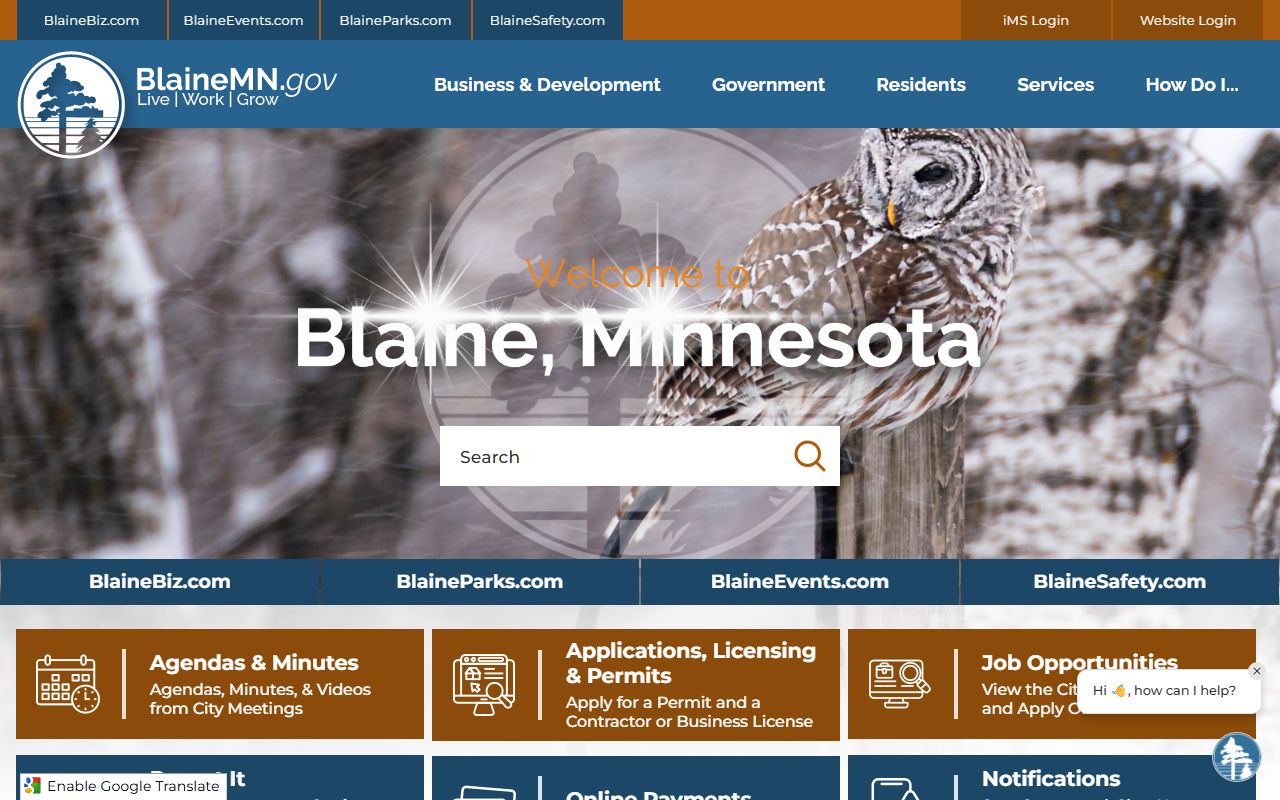
The city website connects residents with department contact details, online services, and links to law enforcement data resources maintained by the city and Anoka County.
What the Police Blotter Covers
The police blotter is the log of incidents that officers respond to and document over time. In Blaine, this covers everything from traffic stops and property crimes to welfare checks and disturbance calls. It's a running record of what the police department handles each day. Not every call becomes a report, and not every report is public, but a substantial portion of law enforcement activity falls under the public data requirements of state law.
The blotter gives residents a window into what's happening in their city. You can use it to track crime trends, verify whether a specific incident was reported, or check general activity in a neighborhood. Journalists use blotter data regularly to cover local crime stories. Attorneys and insurance companies sometimes request specific incident reports to document events for legal or claims purposes.
Minnesota Law and Public Police Data
Minnesota law sets clear rules about what police data must be made available to the public. Minn. Stat. § 13.82 governs law enforcement records specifically. Under this statute, agencies must make public the time, date, and general nature of incidents, the location of calls at a level that protects home addresses, and the names of people who have been arrested. This is the legal backbone of the police blotter concept in Minnesota.
At the same time, the statute protects certain data. Victim names and addresses are private. Information about minors is protected. Active investigation data may be classified as confidential to protect the integrity of ongoing cases. When Blaine releases blotter information, it applies these classifications to make sure only appropriate data reaches the public.
The Minnesota law enforcement data statute is publicly available and explains exactly what agencies must disclose and what they can withhold. The screenshot below shows the state's law enforcement data page under Minn. Stat. § 13.82.
Read Minn. Stat. § 13.82 to understand the full scope of public and private law enforcement data in Minnesota.
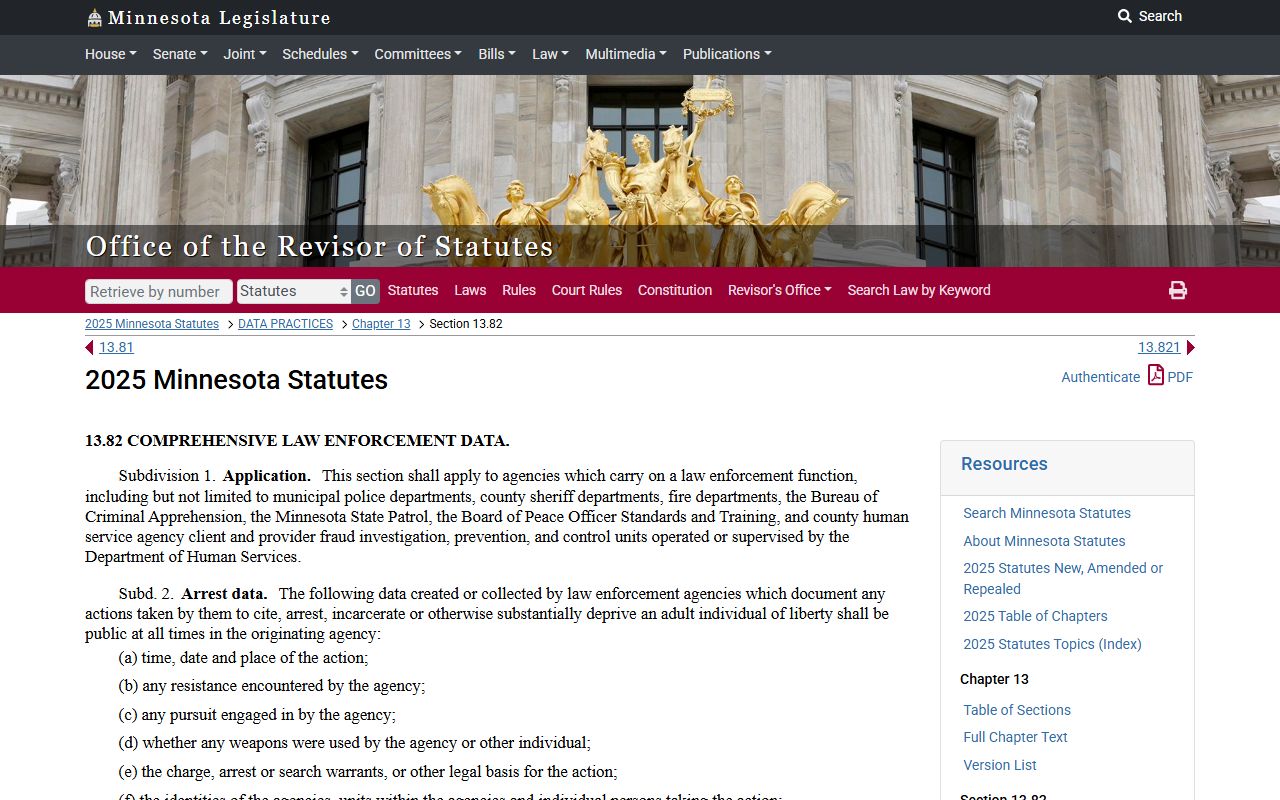
The statute applies to all Minnesota law enforcement agencies, including the Blaine Police Department, and defines what must be disclosed in response to a public records request.
How to Request Records from Blaine Police
To get records from the Blaine Police Department, you need to submit a written request. There's no online portal specific to Blaine police records listed on the city's main site, so written requests go directly to the department. Include as much information as possible: the date of the incident, the type of call, a case or incident number if you have it, and why you need the record. The department will process the request and apply the public, private, or confidential classifications before releasing anything.
Response times for data requests are governed by Minn. Stat. § 13.03, which requires agencies to respond promptly and within a reasonable time. If a department denies part of a request, it must tell you which classification applies to the withheld data. You can challenge a denial through the Minnesota Department of Administration's Information Policy Analysis Division.
For simple matters like requesting a copy of your own report, calling the department directly is often the fastest route. Staff can tell you whether the report is ready, what the fee might be for copies, and how to pick it up or have it sent. Some records are available the same day or within a few days. Others, especially those tied to ongoing investigations, may take longer or may not be released until the case is closed.
Anoka County Resources
Blaine sits within Anoka County, which provides regional law enforcement support through the Anoka County Sheriff's Office. The sheriff's office handles certain county-level functions and maintains its own records separate from the city police. If you're looking for jail records, county-level warrant information, or inmate status, the Anoka County Sheriff's Office is the right place to start. County court records from cases originating in Blaine are filed in Anoka County District Court.
For people looking into arrest status or inmate information, VineLink is another tool. This victim notification service tracks inmate status across many Minnesota jails and can send alerts when an inmate's status changes. It's free to use and doesn't require a formal records request.
Crime Tracking and Safety Information
Beyond the police blotter, residents can track crime trends through several resources. The LexisNexis Community Crime Map is available through some Anoka County cities and lets you see recent incidents plotted on a map. This tool is useful for checking activity in a specific neighborhood or along a particular road. Data on the map is typically delayed and locations are generalized to avoid revealing exact addresses.
Crime statistics compiled over time show trends that single blotter entries don't reveal. If you're researching safety in Blaine for a specific purpose, looking at annual crime statistics alongside the blotter gives a clearer picture. The city and Anoka County both publish safety information that can supplement individual record requests.
Records Request Fees and Timelines
Public agencies in Minnesota can charge fees for locating, retrieving, and copying records. The fee must reflect actual costs and can't be used as a barrier to access. For most basic police reports, fees are modest. Simple document copies are typically a per-page rate. More complex requests involving extensive search time or large volumes of data can cost more, but the agency must give you a fee estimate before proceeding.
If the fee seems unreasonable or if you believe a request was wrongly denied, the Minnesota Department of Administration handles complaints. You don't need an attorney to file a complaint, though legal advice helps in complicated situations. Most basic records requests are resolved without dispute.
Nearby Cities
Blaine shares borders with several metro-area cities, all of which have their own police departments and public records processes.
- Brooklyn Park - southwest of Blaine; Hennepin County border city
- Coon Rapids - west of Blaine along the Mississippi River corridor
- Minneapolis - south of the northern suburbs; largest city in the state
- Maple Grove - southwest of Blaine in Hennepin County