
Minneapolis Police Blotter and Public Records
The Minneapolis Police Department maintains public records under Minn. Stat. § 13.82, which governs law enforcement data in Minnesota. The department serves Minnesota's largest city and provides access to incident reports, arrest data, crime maps, and open data dashboards. Whether you need a copy of a police report or want to browse recent activity, this page covers what is public, how to request records, and where to find data online.
Minneapolis Police Department
The Minneapolis Police Department is the primary law enforcement agency for the city. It operates out of multiple precincts across Minneapolis and handles tens of thousands of calls each year. The department is located within Hennepin County, and some records may involve coordination with the Hennepin County Sheriff's Office. The Records Unit handles formal data requests from members of the public.
Minneapolis Police Department records are governed by the Minnesota Government Data Practices Act, found at Minn. Stat. Chapter 13. Under this law, most law enforcement data is public. Some data is restricted, such as active investigation records, juvenile records, and information that could identify a confidential informant. When a request is denied, the department must cite the specific statute that allows it to withhold the data.
The Records Unit is located at 505 Fourth Ave. S. in Minneapolis. Walk-in hours are Monday through Thursday, 8 a.m. to 4 p.m., and Friday 9 a.m. to 4 p.m. Phone service is available Monday through Friday, 8 to 11 a.m. and 1 to 4 p.m. You can also submit requests in writing or through the online portal.
The Minneapolis Police Department website provides access to department information, services, and public data.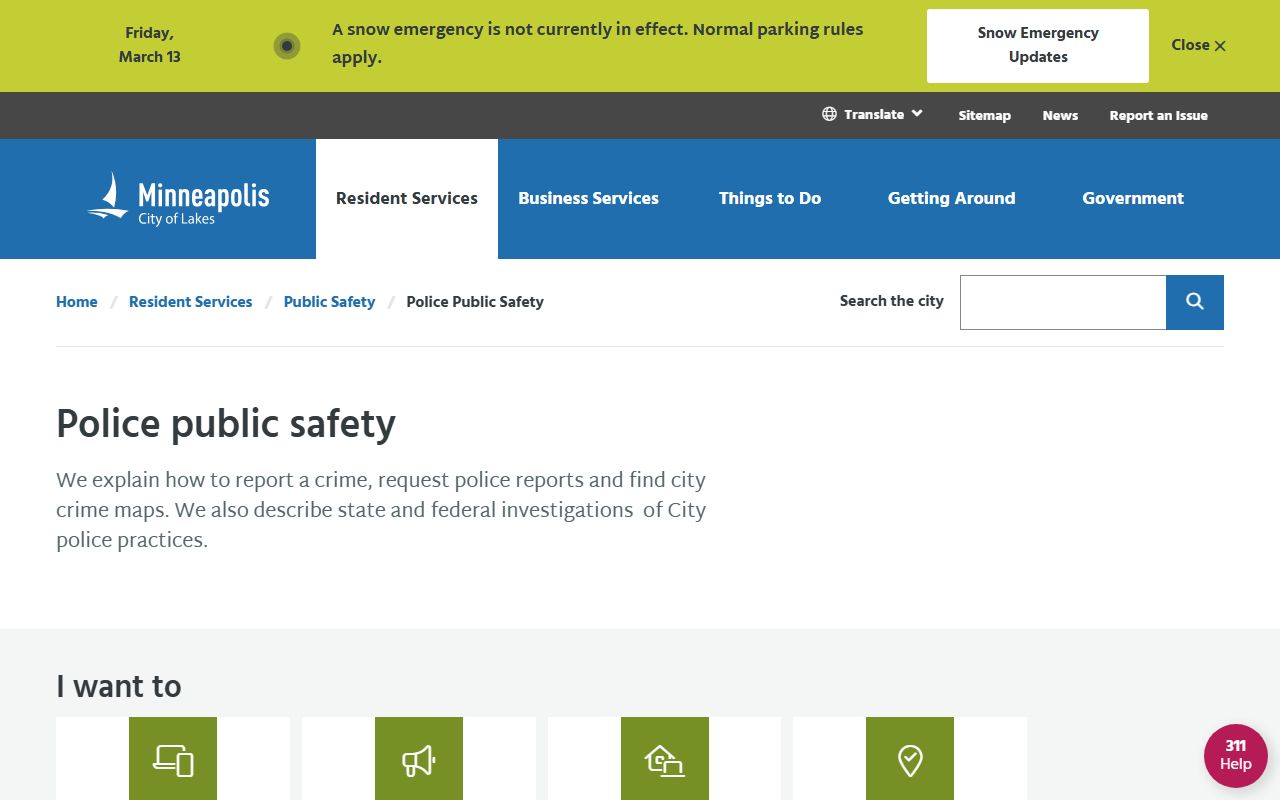
The department site links to records request forms, crime maps, and transparency dashboards.
How to Request Police Blotter Records
To get a copy of a police blotter report or incident record, you must submit a request to the Minneapolis Police Records Unit. You can do this in person, by mail, or through the online portal. When you submit your request, include the case number if you have it. If you do not have the case number, include the date, time, and location of the incident, along with the names of any parties involved.
Under Minn. Stat. § 13.03, government agencies must respond to data requests promptly. Public data must be available for inspection free of charge. If you want copies rather than just inspection, the agency may charge for the actual cost of making those copies. This typically means a per-page fee for printed reports. Video, audio, and other media may have higher fees depending on the format and the work involved in producing the copy.
Accident reports have specific rules. They are generally only available to those directly involved in the crash, their legal representatives, or their insurance carriers. Anyone else must show a valid legal reason to access that data. This is consistent with state law on traffic accident data under Minn. Stat. § 13.82.
Minneapolis Police records and data request information explains the process for submitting requests online or in person.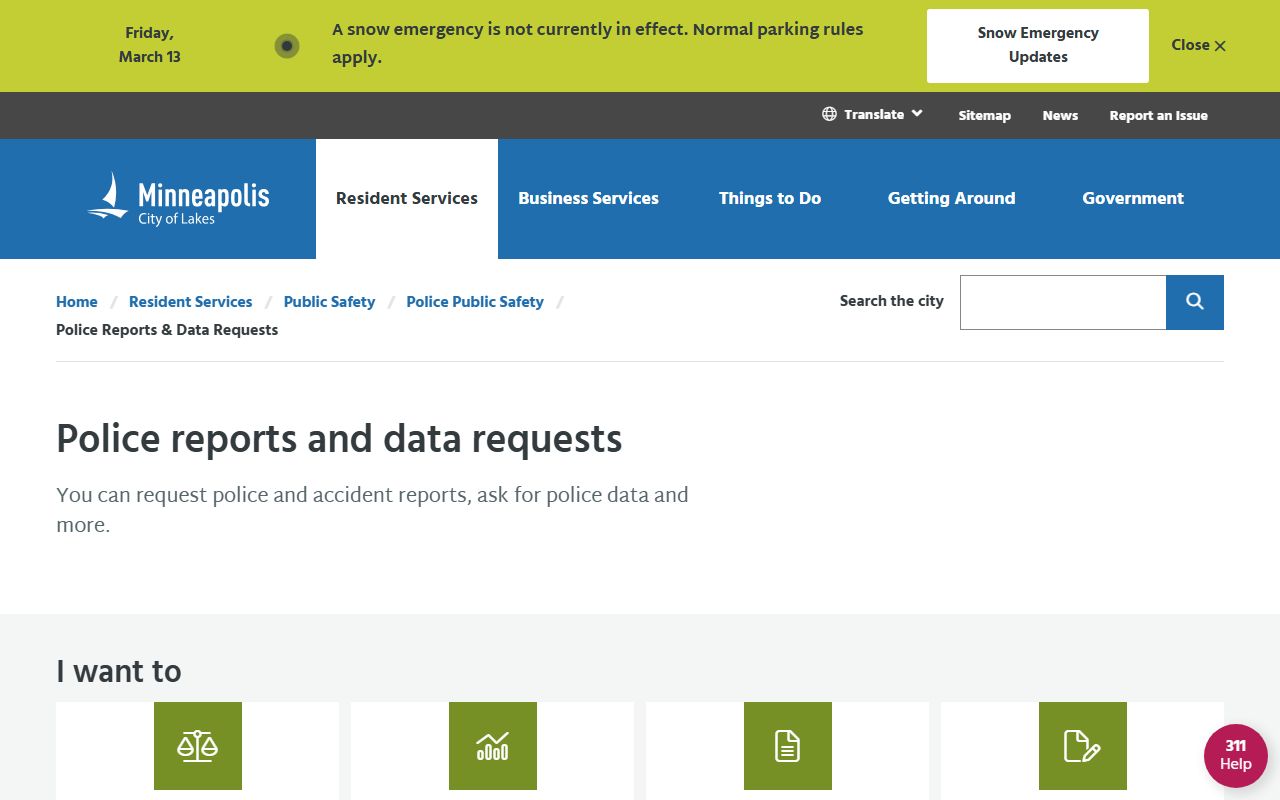
The records page includes links to the online request form and details on what types of data are available.
Crime Data and Police Blotter Dashboards
Minneapolis offers one of the most detailed public crime data systems in Minnesota. The department publishes several interactive dashboards that let anyone view recent police activity. These include an arrests dashboard, a use of force dashboard, a stops dashboard, an officer-involved shooting dashboard, and a general crime dashboard. Each one pulls from department data and updates regularly.
The crime locations map shows incident locations on an interactive map. You can filter by crime type and time period. The shots fired map tracks firearm incidents across the city. These tools give residents and researchers a way to see patterns without filing a formal request. They do not replace the official records request process for detailed report copies.
The police blotter data in these dashboards is public under state law. The department uses these tools to meet its transparency obligations and to give residents easy access to the kind of general incident information that appears in a traditional police blotter. The data is aggregate and may not include every individual incident. For a specific report, a formal request is still the right path.
The Minneapolis Open Data Portal makes police incident data available for download in multiple formats.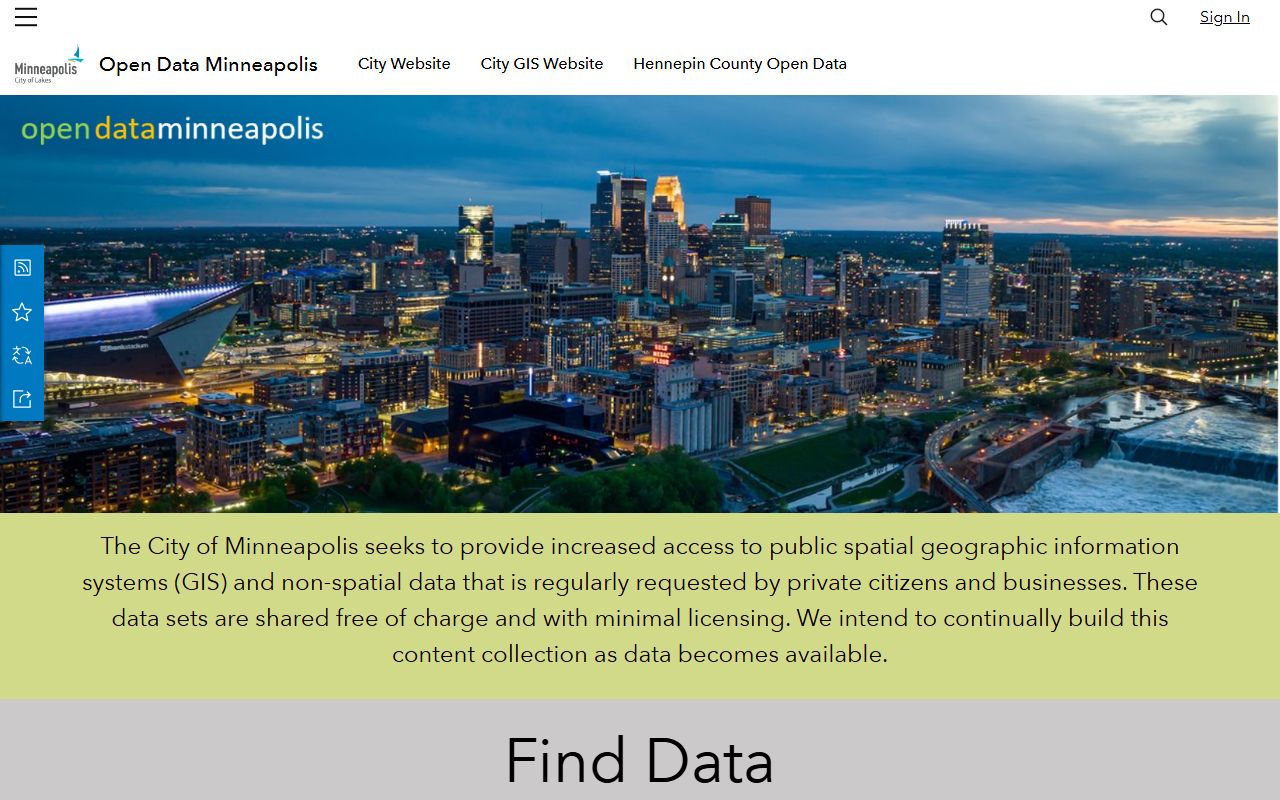
The open data portal includes downloadable crime and incident datasets that go back several years.
What the Police Blotter Includes
A police blotter is a log of incidents that law enforcement responds to. In Minneapolis, this includes calls for service, reported crimes, traffic stops, arrests, and other police activity. Under Minn. Stat. § 13.82, specific types of data are always public. This includes the date, time, and general location of an incident. It also includes a brief description of what was reported, whether an arrest was made, and the name and age of any adult who was arrested.
Some data is not public. Ongoing investigation notes are protected. Victim information in certain cases, such as sexual assault or domestic violence, is restricted to protect privacy. Juvenile arrest records are not public. When a person asks for data that falls into a restricted category, the department must say so and give the legal basis for withholding it.
If you believe data is being improperly withheld, you can contact the Minnesota Department of Administration's Data Practices Office. That office reviews disputes about access to government data and can provide guidance on your rights under Chapter 13.
Court Records and Other Sources
Court records for cases in Minneapolis are filed at Hennepin County District Court. The Minnesota Court Records Online system (MCRO) at mncourts.gov lets you search case information by name or case number for free. Criminal case records show charges, case status, and court dates. Some records may be restricted by court order.
The Minnesota Bureau of Criminal Apprehension (BCA) maintains statewide criminal history records. You can search the BCA public criminal history database online for a fee. This search covers convictions across the state, not just Minneapolis. It does not include charges that were dismissed or cases that resulted in acquittal.
Hennepin County also maintains its own records through the Hennepin County Sheriff's Office. The county handles arrests and incidents that occur outside Minneapolis city limits. For incidents within Minneapolis, the Minneapolis Police Department is the correct agency to contact.
Nearby Cities
Other major cities near Minneapolis with their own police blotter records: