
Duluth Police Blotter Lookup
The Duluth Police Department is the primary law enforcement agency for Minnesota's fourth-largest city, maintaining police blotter records, incident data, and public safety information for a city of roughly 90,000 people situated along the western shore of Lake Superior in St. Louis County. Duluth offers residents and researchers a publicly accessible crime map dashboard that plots three years of incident data on an interactive map, along with a formal data request process for records not available online. This page covers how to find police blotter information, how to submit a data request, and how to navigate related resources in Duluth and St. Louis County.
Duluth Police Department
The Duluth Police Department operates from its main headquarters at 2030 North Arlington Ave, Duluth, MN 55811. The main phone number is 218-730-5400. In addition to the headquarters, the department runs East and West substations to serve different parts of the city more efficiently. Duluth's geography, which stretches along a narrow corridor above Lake Superior, makes substation coverage particularly important for response times in the hillside neighborhoods and areas far from downtown.
The department's website is at duluthmn.gov/police. This is where you can find contact information, department news, public data tools, and information about how to request records. The department is committed to transparency and has built several online tools to give the public access to police blotter data without requiring formal requests for commonly needed information.
Officers handle a full range of calls across the city's 68 square miles. The department works closely with the St. Louis County Sheriff's Office on matters that extend beyond city limits, and coordinates with the Minnesota State Patrol on highway incidents on Interstate 35 and other state roads that run through the city. Each agency maintains its own records, so knowing which one responded to a particular call helps you direct your request to the right place.
The Duluth Police Department's website provides access to the crime map dashboard, data request tools, and contact information for the department's records staff. Visit duluthmn.gov/police to get started.
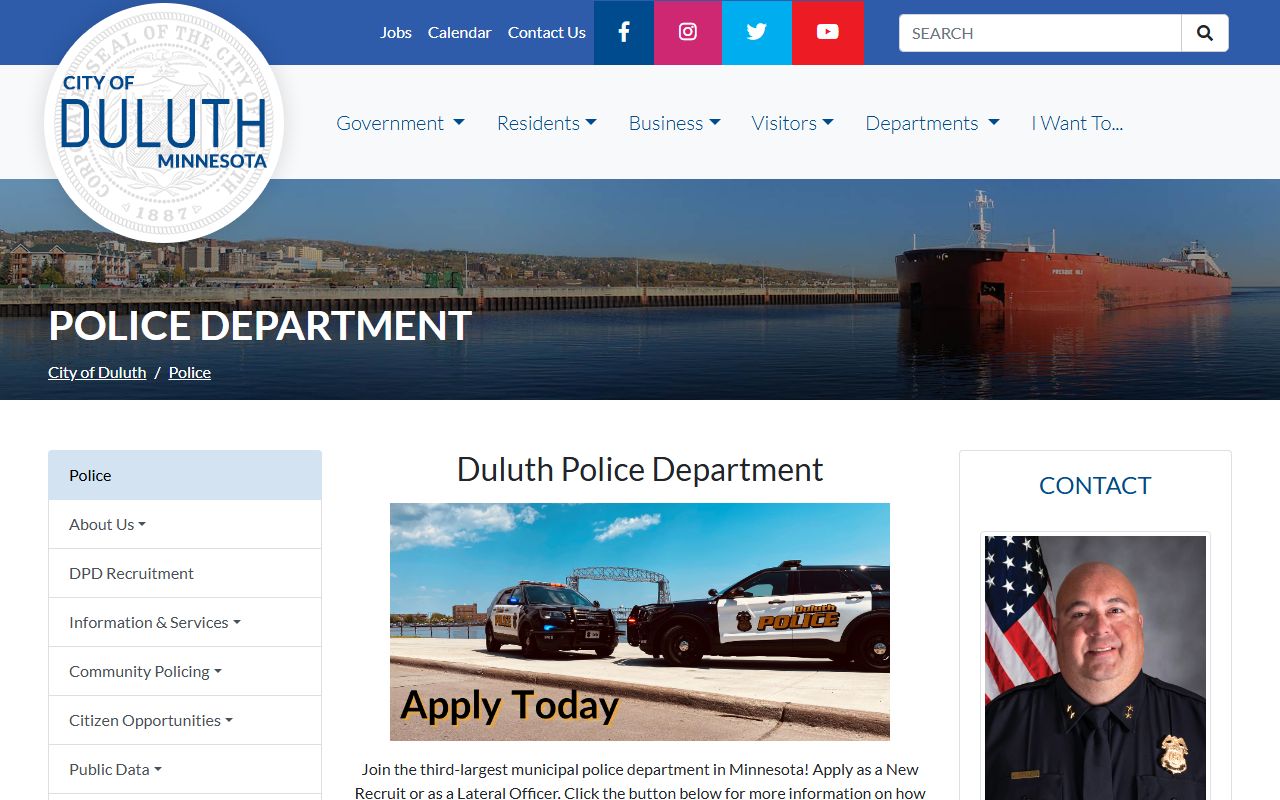
The Duluth Police Department provides online access to crime map data and a formal data request process for police blotter records and other public safety information.
Crime Map Dashboard and Public Data
One of Duluth's most useful transparency tools is the crime map dashboard. This interactive map shows incidents plotted by location and covers a rolling three-year period. You can zoom into specific neighborhoods, filter by incident type, and see how crime patterns have changed over time. The dashboard is a practical tool for residents who want to understand what is happening in their area without filing a formal records request.
The crime map is available at duluthmn.gov/police/public-data/crime-map-dashboard/. It displays publicly available data as defined by Minnesota law, which means incidents are shown with enough detail to be useful without disclosing private information about victims or ongoing investigations. The three-year window is long enough to identify trends and understand whether certain types of incidents are increasing or decreasing in specific areas.
Duluth's crime map dashboard gives the public an interactive view of three years of police blotter incident data plotted by location. Explore the map at duluthmn.gov/police/public-data/crime-map-dashboard/.
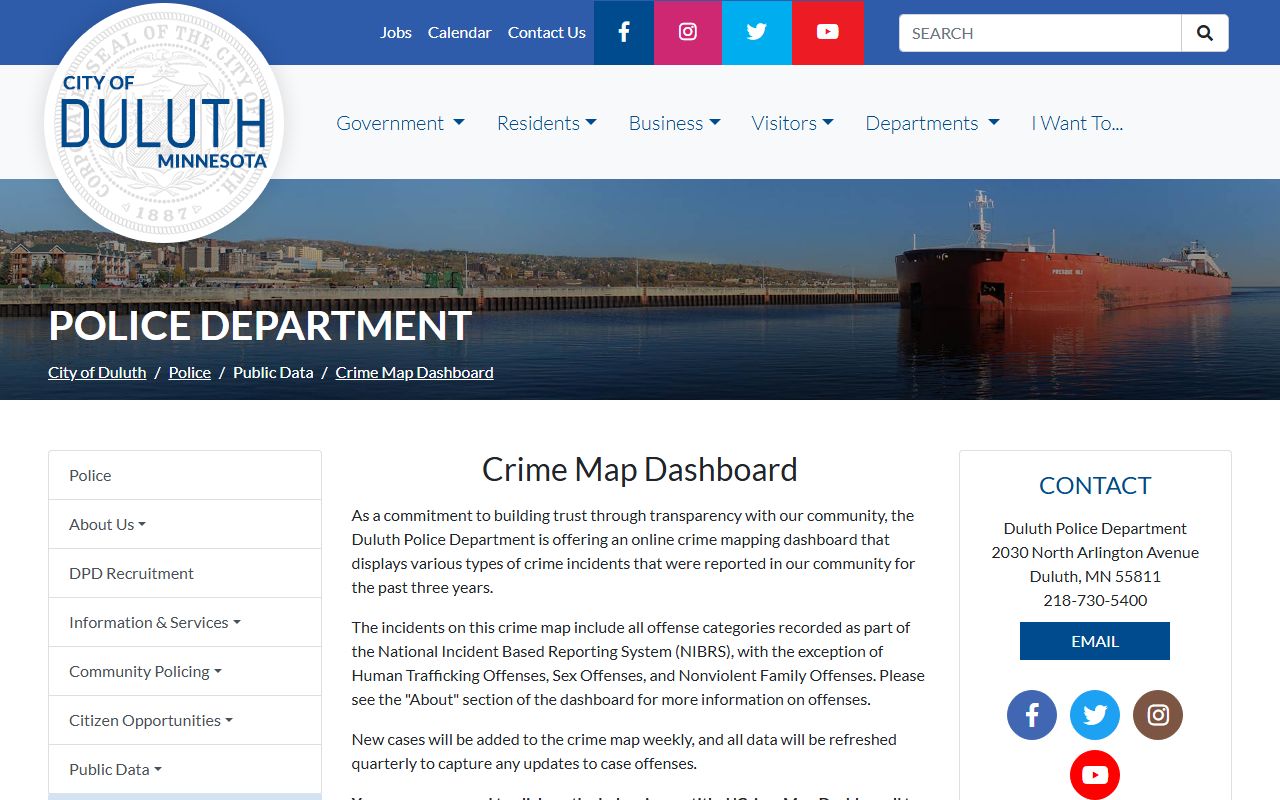
The Duluth Police Department's crime map dashboard allows residents to search three years of police blotter incident data interactively, filtering by neighborhood and incident type.
The crime map is a good first step, but it shows aggregate and mapped data rather than full incident reports. If you need the details of a specific case, a data request gives you access to the actual records. The public data page on the department's website explains the difference and helps you decide which approach fits your needs.
What Is a Police Blotter?
A police blotter is a daily or weekly log of incidents, calls, and arrests recorded by a law enforcement agency. It serves as a public record of police activity. Some departments publish abbreviated blotter summaries on their websites or share them with local news outlets. Others make the raw data available through portals or on request. The goal is the same: to let the public see what officers are doing and where.
Minnesota law sets the rules for what can be shared. Minn. Stat. § 13.82 governs law enforcement data specifically. It lists the information that must be released as public data, including the time, place, and nature of an incident; the names and ages of people arrested; the charges filed; and the identity of the officers involved. It also lists what is private, including victim information in domestic and sexual assault cases, juvenile records, and data that could compromise an active investigation.
When you look at the Duluth crime map, you are seeing data that has been filtered to include only public information. Individual names and private details are not shown. When you request a full incident report, the department applies these same classifications before releasing it, redacting any portions that are legally protected while providing the public portions of the record.
How to Submit a Police Data Request
The Duluth Police Department has a dedicated police data request page at duluthmn.gov/police/public-data/police-data-request/. This page explains what types of records are available, how to submit a request, and what to expect during the process. Using the official data request page is the most efficient way to get records from the department.
Submit a police data request for Duluth police blotter records and incident reports through the department's official data request page at duluthmn.gov/police/public-data/police-data-request/.
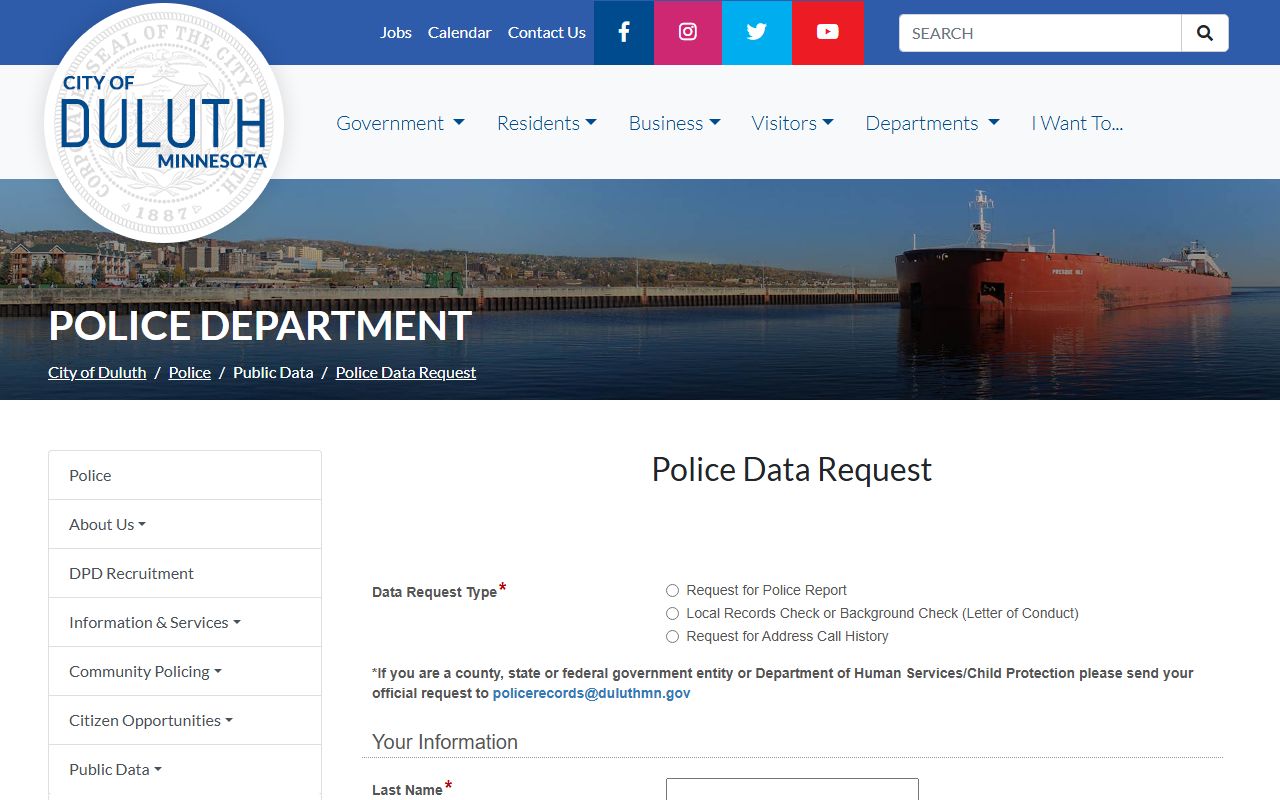
The Duluth Police Department's data request page guides residents through the process of requesting police blotter records, incident reports, and other public safety data.
When submitting a request, include the date and approximate time of the incident, the location, the type of incident, and the names of any parties involved if known. A case number speeds up the process significantly. Be as specific as possible. Broad requests take longer to process and may result in a request for clarification before staff can begin searching.
Minnesota requires agencies to respond within five business days under Minn. Stat. § 13.03. If the records are not ready in that time, the department will tell you when to expect them. Fees are charged at actual cost. If a request involves significant staff time, the department may provide an estimate before proceeding. You have the right to an itemized breakdown of any fees charged.
If your request is denied, you will receive a written explanation citing the specific legal basis for the denial. You can appeal a denial to the Minnesota Commissioner of Administration. The appeal process is designed to give requesters a path to review if they believe a denial was improper.
St. Louis County and Court Records
Duluth serves as the county seat of St. Louis County, the largest county by area in Minnesota. The St. Louis County Sheriff's Office handles law enforcement outside city limits across an enormous rural territory. The county courthouse in Duluth is also where district court proceedings take place for criminal cases originating in the city. If a police blotter entry in Duluth led to an arrest and charges, the resulting court case is in St. Louis County District Court.
Minnesota Courts Online at mncourts.gov is the best place to find case records after an arrest. Court records show charges filed, court dates, plea entries, verdicts, and sentencing. They complement police blotter records by covering what happened after the initial police contact. Some court records are public; others are sealed or restricted, particularly in cases involving juveniles or certain sensitive matters.
The Minnesota State Patrol also operates in Duluth, primarily on state highways and interstates. Crash reports from state-patrolled roads go to the State Patrol, not the city police department. Contact the State Patrol District 1 office in Duluth if you need a crash report that involves a highway incident rather than a city street.
Nearby Cities
Duluth is in northeastern Minnesota, well removed from the Twin Cities metro. If you need police blotter records from other qualifying cities in the state, these pages cover departments with similar resources: