
Find Police Blotter Records in Bloomington
The Bloomington Police Department serves one of the largest suburban cities in the Twin Cities metro, handling police blotter records, incident reports, and public safety data for a city of over 85,000 residents in Hennepin County. Bloomington offers residents multiple ways to access public records, from an online JustFOIA request portal to a publicly available police data dashboard showing arrest statistics and department activity. This page covers how to search for police blotter data, submit a records request, and understand what information the department makes available under Minnesota's Government Data Practices Act.
Bloomington Police Department Overview
The Bloomington Police Department serves a city that blends residential neighborhoods with major commercial corridors, including the Mall of America and the Minneapolis-Saint Paul International Airport area. Officers respond to a high volume of calls ranging from property crimes and traffic incidents to more serious matters. The department is known for its transparency tools, including a data dashboard and an online records request system that makes it easier for the public to access blotter records without visiting a physical office.
The department's website is at bloomingtonmn.gov/pd/BPD. For non-emergency calls and general inquiries, the main number is 952-563-4900. Records requests go through the JustFOIA portal rather than directly to records staff, which helps track requests and meet state response deadlines.
Bloomington also offers Police-to-Citizen online reporting for certain non-emergency incidents. If you were a victim of a minor property crime and no suspect was identified, you may be able to file a report online rather than waiting for an officer. The online report generates a case number that you can use for insurance purposes and for retrieving records later.
Learn more about the Bloomington Police Department's services, records access tools, and department programs at bloomingtonmn.gov/pd/BPD.
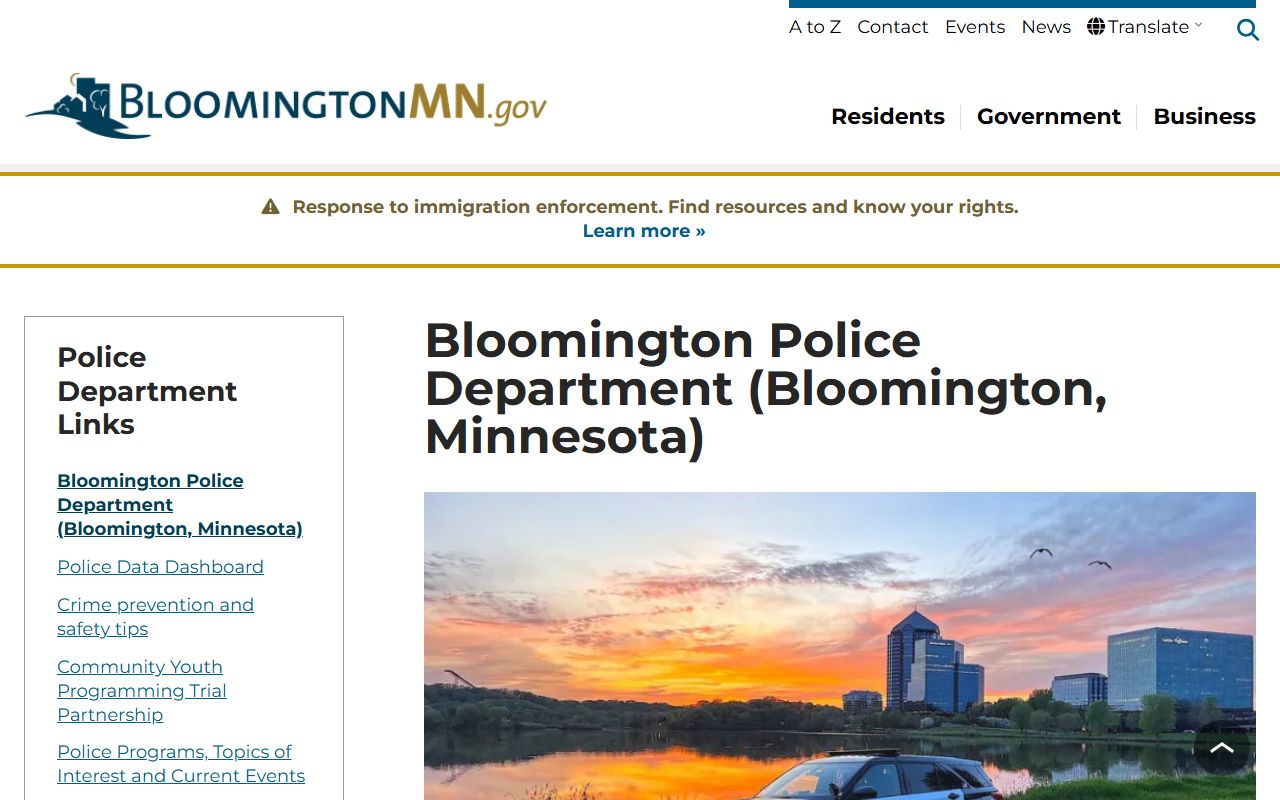
The Bloomington Police Department's website provides access to the JustFOIA records request portal, the police data dashboard, and online reporting options for non-emergency incidents.
Police Blotter and Public Data Dashboard
Bloomington maintains a police data dashboard that gives the public a direct look at department statistics without requiring a formal records request. The dashboard includes arrest data, use-of-force incidents, calls for service, and other transparency metrics. It is updated regularly and designed to help residents understand how the department operates and what types of incidents officers handle most often.
The dashboard is available at bloomingtonmn.gov/pd/dashboard. This is a good starting point if you want a broad picture of police activity in Bloomington rather than details about a specific incident. The data is presented in charts and tables that are easy to read without any technical background. You can view trends over time and compare different categories of police activity.
The Bloomington Police data dashboard provides arrest statistics, use-of-force data, and other public safety metrics. Visit bloomingtonmn.gov/pd/dashboard to view current data.
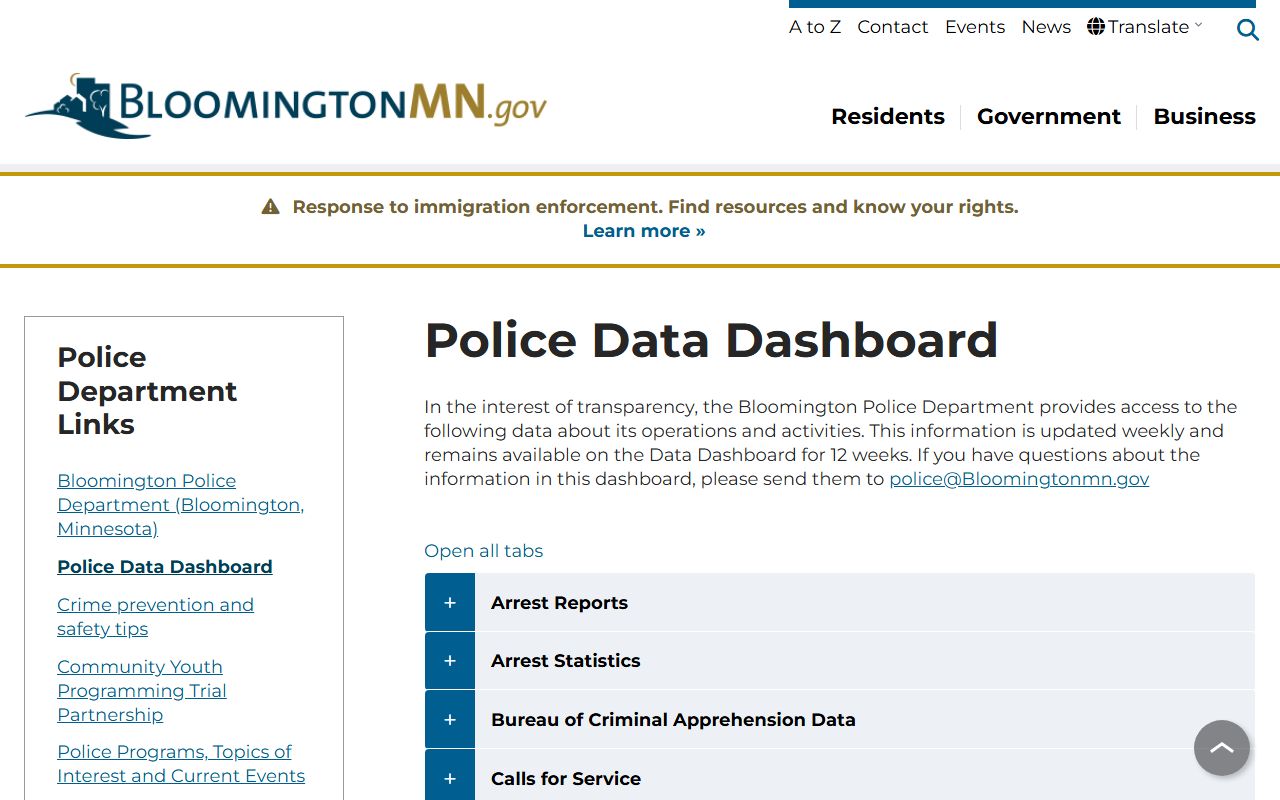
Bloomington's police data dashboard is a transparency tool that displays arrest data, use-of-force statistics, and other metrics related to police blotter activity in the city.
The dashboard reflects Bloomington's commitment to open government. Many cities in Minnesota do not publish this level of detail voluntarily. Bloomington's decision to maintain a public-facing data tool means residents can monitor police activity without relying solely on formal records requests. Still, the dashboard summarizes aggregate data. For records tied to a specific case or incident, you still need to file a request.
What Is a Police Blotter?
A police blotter is a log of calls and incidents handled by a police department over a given period. It typically includes the date, time, location, type of call, and case number for each entry. Some departments publish blotter summaries online or in local newspapers. Others make the data available only when someone asks for it. Either way, the blotter gives the public a window into where and when police activity is happening.
Minnesota law defines what parts of a law enforcement record are public. Under Minn. Stat. § 13.82, the public portion of an arrest record includes the subject's name, date of birth, the time and place of arrest, the charge, and the name of the arresting officer. Information that could identify victims of certain crimes, ongoing investigative details, and juvenile records are classified as private. This means a blotter or incident log will typically show you who was arrested and why, but not personal details about victims or witnesses.
When you access the Bloomington data dashboard or review call data, you are viewing records that fall within the public category. The department has already applied the legal classifications before publishing the data. If you need records that go beyond what the dashboard shows, submit a request through JustFOIA and let the records unit determine what can be released.
How to Request Bloomington Police Blotter Records
The Bloomington Police Department uses the JustFOIA platform for public records requests. This is an online portal that guides you through the submission process, tracks your request, and notifies you when records are ready. You do not need to visit the department in person or call ahead to start a request.
To submit a request, go to bloomingtonmn.justfoia.com and fill out the form. You will be asked to describe the records you want, provide contact information, and indicate the time period you are interested in. Be specific. A request for "all police reports from 2023" is too broad and may be delayed or denied. A request for "the incident report from a car break-in at 1000 American Blvd on March 15, 2024, case number BPXXXX" is the kind of specific request that gets processed quickly.
Submit a records request to the Bloomington Police Department through the JustFOIA portal at bloomingtonmn.justfoia.com.
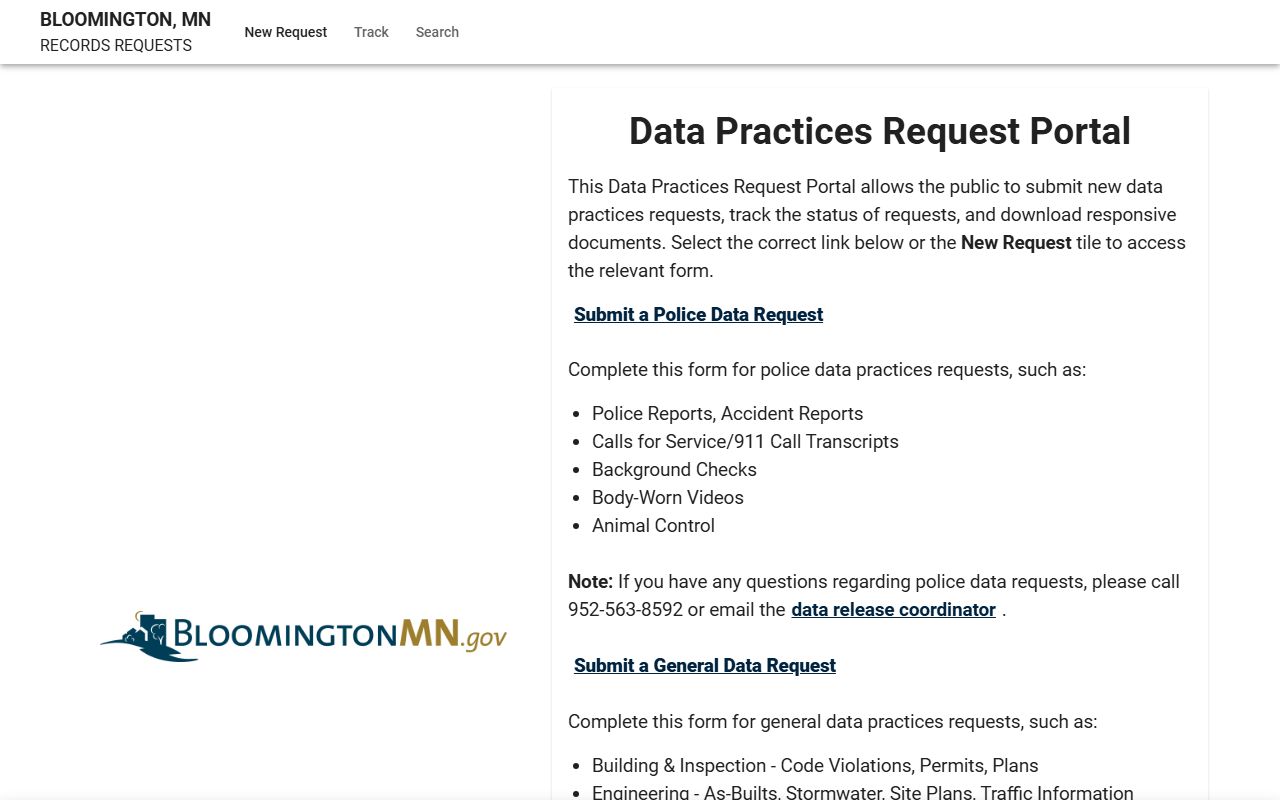
The Bloomington Police Department's JustFOIA portal allows residents to submit online records requests for police blotter data, incident reports, and other public safety records.
After you submit, you will receive a confirmation with a tracking number. Minnesota law requires agencies to respond within five business days. Under Minn. Stat. § 13.03, the department must either provide the records, tell you when they will be available, or explain why the request is denied. If denied in whole or in part, you have the right to appeal to the Minnesota Department of Administration.
Fees for records vary depending on the type. Paper copies are typically charged per page. Electronic records may involve fees for staff time spent retrieving and preparing the data. The JustFOIA portal will notify you of any costs before records are released, giving you the option to modify your request if the fee is higher than expected.
Hennepin County and Related Resources
Bloomington sits in Hennepin County, Minnesota's most populous county. The Hennepin County Sheriff's Office handles law enforcement for unincorporated parts of the county and operates the county jail. Criminal cases originating in Bloomington go through Hennepin County District Court. If you need court records related to a Bloomington arrest or criminal case, the Minnesota Courts website at mncourts.gov is where to look.
The Hennepin County Government Center in Minneapolis also maintains civil and property records that may be relevant depending on your research. For background checks that go beyond local police records, the Minnesota Bureau of Criminal Apprehension handles statewide criminal history data through the Department of Public Safety.
Traffic crash reports involving Bloomington roads may be filed with either the Bloomington Police Department or the Minnesota State Patrol depending on which agency responded. If you are not sure which agency has the report you need, contacting the Bloomington records unit is a good first step. They can confirm whether the department has the record or direct you to the right agency.
Nearby Cities
Other qualifying cities in the Twin Cities metro area have their own police blotter pages. These may be useful if an incident occurred near a city boundary or if you are researching activity across multiple communities: