
Eagan Police Blotter and Records Access
The Eagan Police Department maintains public law enforcement records for one of Dakota County's largest cities, and residents can access police blotter data covering incidents, arrests, and calls for service through the department's records process governed by the Minnesota Government Data Practices Act, which establishes clear rules for what information must be made available to the public and what remains protected.
Eagan Police Department Overview
The Eagan Police Department serves a city of approximately 68,000 residents in the southern Twin Cities metro. Eagan is located in Dakota County, south of St. Paul along the Interstate 35E corridor. The police department handles patrol, investigations, traffic enforcement, and community programs across the city. For general inquiries and records requests, contact the department through the city's main website at cityofeagan.com or by phone through City Hall. For emergencies, call 911.
Eagan shares dispatch services with other Dakota County communities through Dakota 911. The non-emergency dispatch line is 651-322-2323 or 952-322-2323. This regional dispatch center serves Eagan, Burnsville, Apple Valley, Lakeville, and other Dakota County cities, coordinating police and fire response across the county.
The state's law enforcement data framework governs how Eagan police records are classified and released. The screenshot below shows the state's law enforcement data statute page, which forms the legal basis for public access to police blotter records in Eagan and across Minnesota.
Read Minn. Stat. § 13.82 to understand what law enforcement data must be made public in Minnesota.
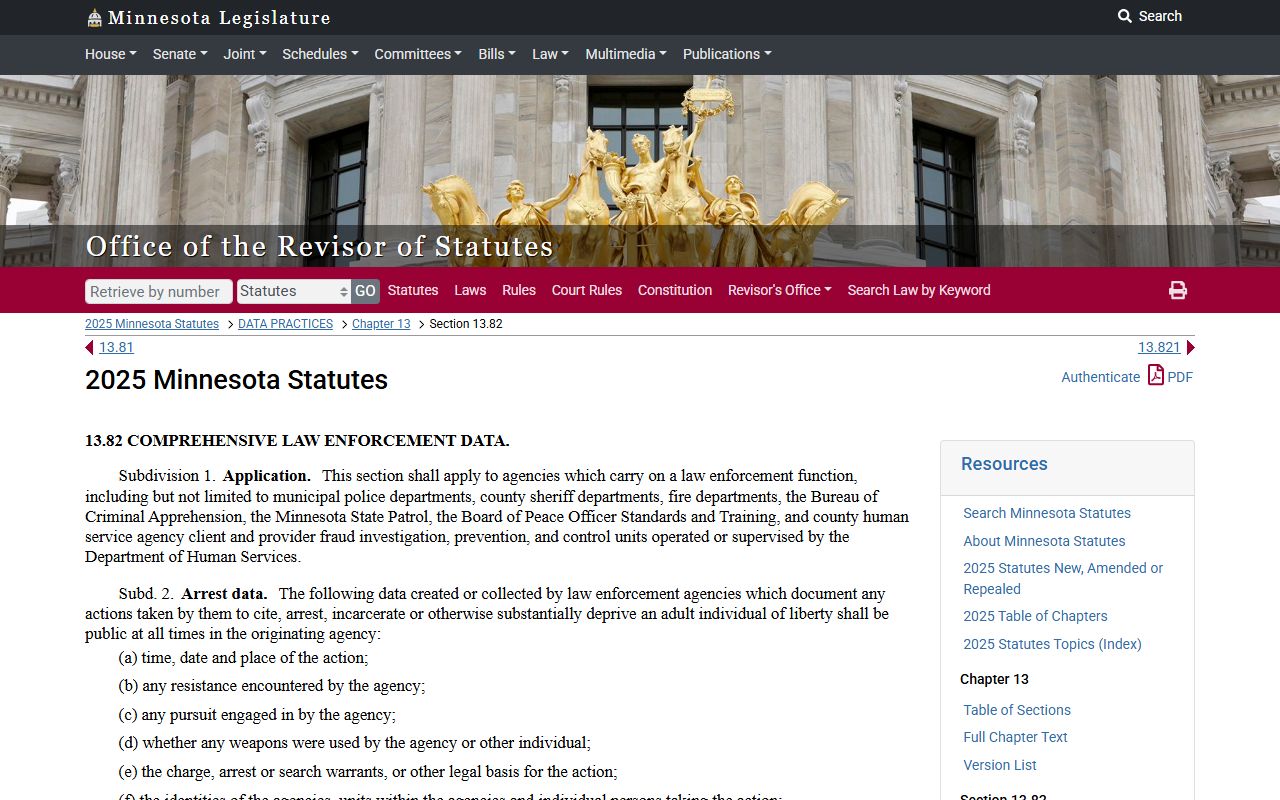
This statute applies to Eagan and all other Minnesota law enforcement agencies, defining the boundary between public police blotter data and protected private or confidential information.
What Police Blotter Records Cover
The police blotter is the ongoing log of incidents the Eagan Police Department handles. It's not a single document but rather the accumulated record of calls for service, incident reports, and arrests that officers generate each day. Common blotter entries include traffic stops, theft reports, vandalism calls, burglary reports, disturbance responses, and DWI arrests. These records give the public a running account of law enforcement activity across the city.
Each incident that generates a report becomes part of the department's records. The details captured include the date and time, the type of call, the general location, and the outcome. Arrest records include the name of the person arrested, the charges, and when the arrest took place. This information is public under Minnesota law. What stays private includes victim identities, witness information, and details about minors.
People use blotter records for a wide range of purposes. Journalists check them for crime coverage. Residents review them to stay informed about their neighborhood. Insurance adjusters and attorneys request specific reports for legal and claims purposes. Real estate professionals sometimes reference crime data when advising clients. The blotter serves as a shared public record of law enforcement activity that different people use in different ways.
How Minnesota Law Governs This Data
Minnesota's approach to law enforcement data is more detailed than many states. The core statute is Minn. Stat. § 13.82, which lists specific categories of data that agencies must disclose. The law doesn't just say "release public records." It actually defines which categories of law enforcement data are public, which are private, and which are confidential. This level of specificity makes it easier for requesters to know what they're entitled to and for agencies to apply the rules consistently.
Public data under the statute includes call time and date, incident type and location, arrest names and charges, and basic response data. Private data includes victim names and addresses, information about complainants who aren't arrested, and data about minors. Confidential data includes active investigation information and criminal intelligence data. When you get blotter data from Eagan, you're seeing what's been classified as public under these rules.
How to Request Records from Eagan Police
To request records from the Eagan Police Department, contact the department directly. Requests can be submitted in writing, by email, or in person. You'll need to provide enough information to identify the record: the date or date range, the type of incident, and a case or incident number if you have one. The more specific your request, the faster the department can locate and process it.
Once the department receives your request, it reviews the data you've asked for and applies the classifications from state law. Public data is released promptly. If your request includes private or confidential data, the department will redact those portions and release what remains. You'll receive a written explanation if any data is withheld.
Minn. Stat. § 13.03 governs the procedural side of data requests across all Minnesota government agencies. It requires agencies to respond promptly, provide cost estimates before incurring large costs, and explain denials in writing with the relevant statute cited. This applies to Eagan's police records requests the same way it applies to any other government data request in the state.
The state's government data practices framework, shown in the screenshot below, sets the procedural rules that Eagan Police must follow when responding to records requests.
Read Minn. Stat. § 13.03 to understand the procedural requirements for government data requests in Minnesota.
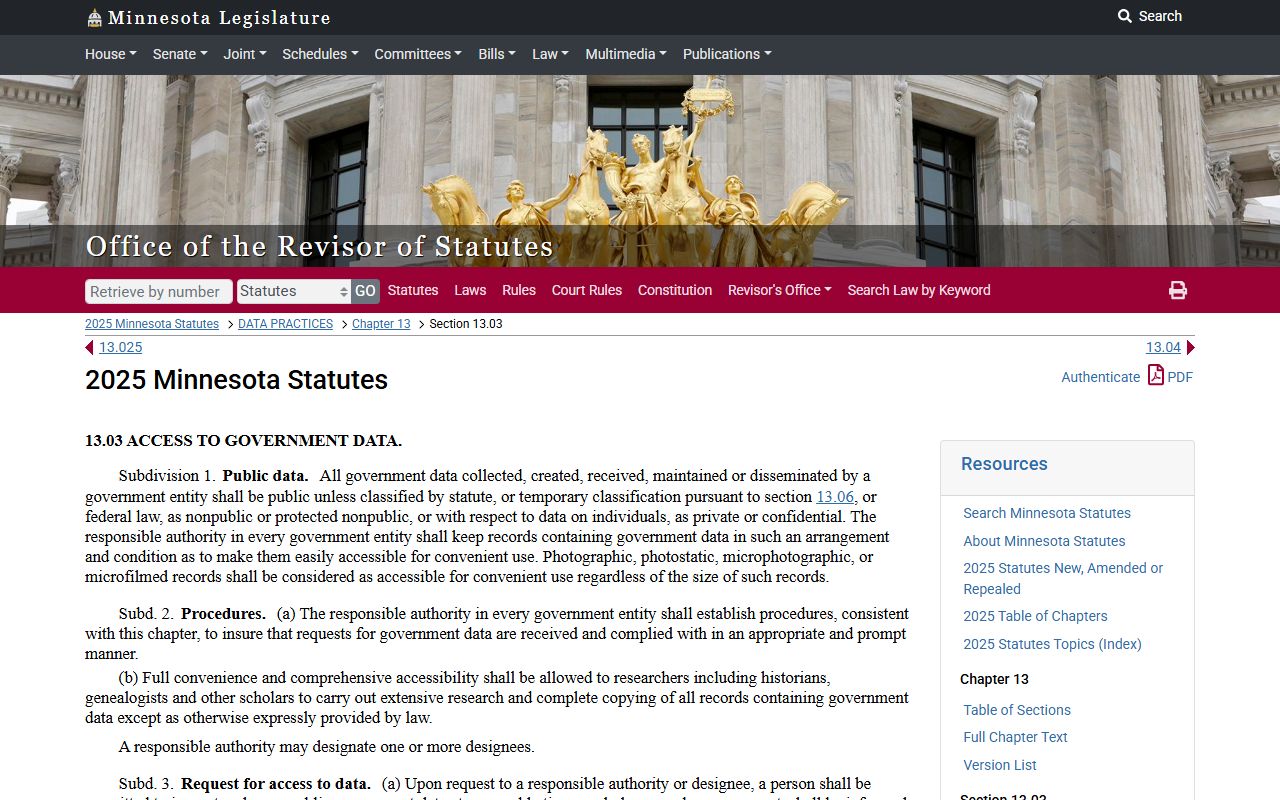
This statute sets timelines and procedures that Eagan Police must follow when responding to public data requests, including police blotter and incident report requests.
Dakota County Law Enforcement Resources
Eagan is part of Dakota County, and several county resources supplement what the city police department provides. The Dakota County Sheriff's Office maintains county-level law enforcement records and operates the county jail. If you're looking for inmate status, warrant information, or records generated by sheriff's deputies rather than Eagan city officers, the Dakota County Law Enforcement Center is the right place to start.
Dakota County maintains a warrant search tool and an inmate search database. These are separate from the city police blotter and cover county-level records. For court records, including case filings and outcomes from cases that originated with Eagan police arrests, you'd look at Dakota County District Court, which maintains those records separately from both the city police and the county sheriff.
The regional dispatch center, Dakota 911, serves Eagan and several other Dakota County cities. It provides 24-hour communications and emergency dispatch. Non-emergency calls go to 651-322-2323 or 952-322-2323.
Arrest Records and Public Information
When someone is arrested in Eagan, the basic facts are public. The person's name, the charges, the date and location of the arrest, and whether they were held or released are all public data under § 13.82. This is the core of what appears in arrest-related blotter entries. If you're trying to confirm whether someone was arrested or what they were charged with, this is the data you're looking for.
What happens after the arrest involves the court system, which has its own records. If charges were filed, the case moves to Dakota County District Court. Plea agreements, hearings, and sentencing records are court records, not police records. The police blotter covers the arrest. The court records cover everything that comes after. Both are public, but through different offices and different request processes.
Nearby Cities
Eagan is surrounded by other Dakota County communities and south-metro cities, each with its own police department and records process.
- Burnsville - west of Eagan along I-35W in Dakota County
- Apple Valley - south of Eagan; shares Dakota County resources
- Lakeville - south of Apple Valley in Dakota County
- Bloomington - north of Eagan across the county line in Hennepin County
- Woodbury - east of Eagan in Washington County