
Morrison County Police Blotter
Morrison County Police Blotter records are managed by the Morrison County Sheriff's Office in Little Falls and by city police departments in Little Falls and Pierz, which serve this central Minnesota county along the Mississippi River corridor. The Brainerd Dispatch and the Morrison County Record both publish regular blotter summaries drawn from sheriff and local police data, giving residents a way to review recent law enforcement activity without making a formal records request. For copies of specific incident reports, contact the relevant agency directly.
Morrison County Sheriff's Office
The Morrison County Sheriff's Office is the primary law enforcement agency for the county. The main office is in Little Falls at 207 1st Street NE, Little Falls, MN 56345, the same block as the Little Falls Police Department. The county website at morrisoncountymn.gov has contact information and links to department resources. For records requests, contact the sheriff's office directly by phone or in person during business hours.
The screenshot below is from the Morrison County Sheriff's website, which is the main hub for law enforcement information in the county.
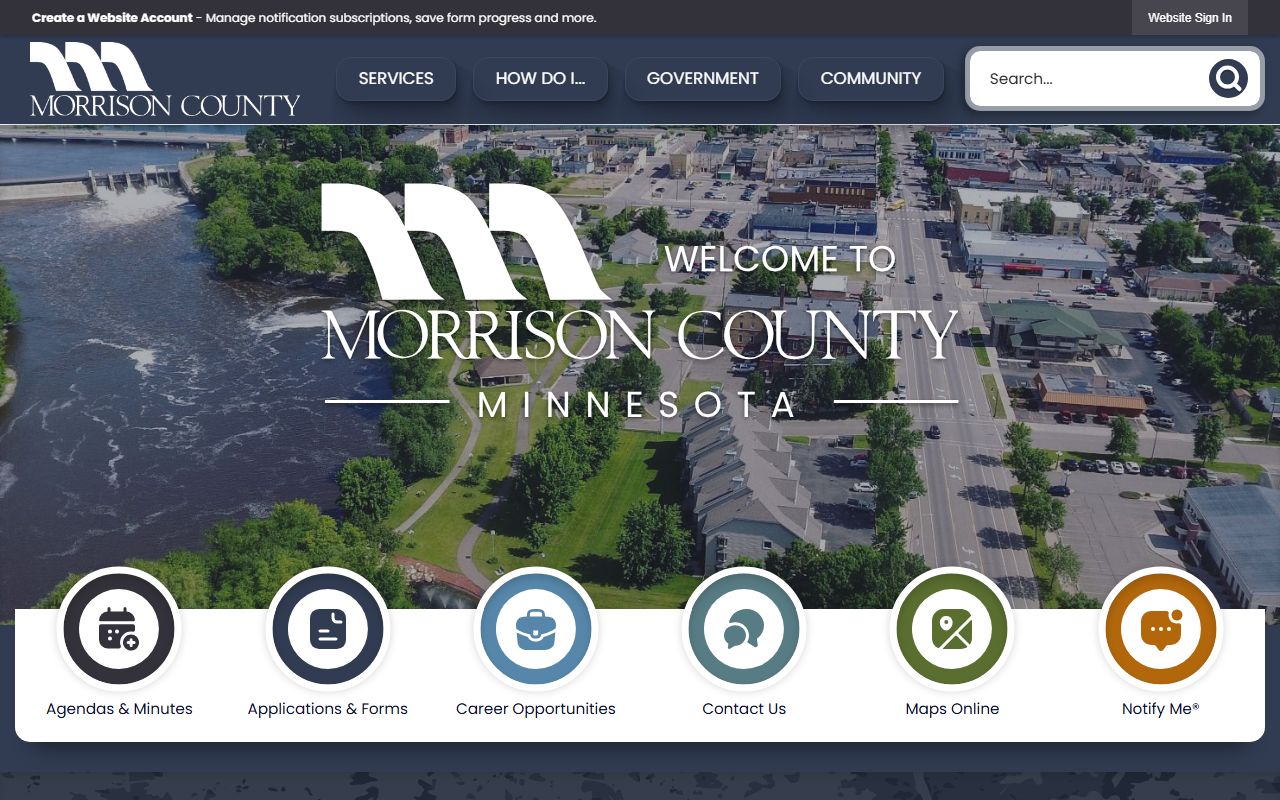
The county site links to the sheriff's office, provides department contacts, and gives residents a starting point for records and public safety information.
City Police Departments
Little Falls Police Department shares the block at 207 1st Street NE with the sheriff's office. The Pierz Police Department is at 101 Main St S, Morrison, MN 56364 (note the address uses the old Morrison township name, not the city of Morrison). If an incident happened within a city's limits, the city department is likely the primary record holder. For incidents in unincorporated areas, the sheriff's office holds the report. When in doubt, start with the sheriff's office and they can direct you to the right agency.
Published Blotter Sources
Two regional news outlets regularly publish Police Blotter summaries for Morrison County. The Brainerd Dispatch covers the region and publishes summaries of sheriff and police activity. The Morrison County Record publishes a weekly sheriff report that summarizes calls, arrests, and other activity from the prior week. These published summaries are free to browse and do not require a formal records request. They give a general sense of law enforcement activity without the formal request process.
Keep in mind that published blotter summaries are edited. Not every incident makes it into the newspaper. Not every detail of a reported incident is included. If you need the full official report, you will still need to go directly to the sheriff's office or the relevant city department.
Requesting Incident Reports
Under Minn. Stat. § 13.82, Minnesota law enforcement agencies must make basic arrest data available to the public on request. This covers the name of the person arrested, the time and location of the arrest, the offense charged, and the officer who made the arrest. This data is public. Agencies cannot withhold it. Portions of a report that touch on active investigations, victim identities, or other sensitive matters may be protected, but the basic facts of an arrest are always public.
The Minnesota Government Data Practices Act, Minn. Stat. § 13.03, sets the broader rules for how all government agencies in Minnesota must handle data requests. Agencies must respond promptly. They must tell you what data is available and what is not. You do not have to explain why you are asking. Plan to visit the office in person with a photo ID and a clear description of what you need.
Statewide Records Tools
Court case records for Morrison County are available through the Minnesota Courts website. Morrison County falls under the Seventh Judicial District. Court records show case filings, hearing dates, and outcomes for cases that went through the courts after a local arrest. Police Blotter data and court records are different sources, and you often need both to get the full picture of a case.
For custody status, use VineLink to check whether someone is currently held in a Minnesota facility. VineLink covers the Morrison County jail and sends automatic notifications to registered users when custody status changes. The service is free and does not require a records request.
The Minnesota Bureau of Criminal Apprehension maintains statewide criminal history records. For comprehensive background data that goes beyond the local blotter, the BCA is the right agency to contact. They handle background checks and support local law enforcement with data resources across the state.
Community Crime Mapping
Check Community Crime Map to see whether Morrison County agencies share incident data with this public mapping tool. The map can be useful for seeing where incidents cluster in and around Little Falls without making a formal records request. Availability depends on local agency participation, so check the site directly for current coverage.
The Minnesota Sheriffs' Association is a useful statewide resource if you have questions about how to navigate records requests in any Minnesota county, including Morrison.
Nearby Counties
Morrison County borders several other central Minnesota counties. If an incident crossed county lines or you are unsure which agency handled a specific call, these offices may have records as well.
- Stearns County - county seat St. Cloud
- Todd County - county seat Long Prairie
- Crow Wing County - county seat Brainerd
- Mille Lacs County - county seat Milaca
Tips for Researching Morrison County Records
Start with the published newspaper blotter summaries if you are doing general research. The Morrison County Record's weekly sheriff report is a good first pass. If you find a relevant entry and need the full report, you then know the approximate date and type of incident, which makes the formal records request much faster.
For older incidents, call the sheriff's office before visiting. Ask whether records from the specific time period are still available and in what format. Digital records may go back a decade or more in many counties, but older paper records may have been archived or destroyed under normal retention schedules. Knowing this ahead of time saves a wasted trip.