
St. Cloud Police Blotter and Public Records
The St. Cloud Police Department serves Minnesota's seventh-largest city and the county seat of Stearns County, maintaining police blotter records and incident logs that fall under the public data requirements of the Minnesota Government Data Practices Act, giving residents, researchers, and legal professionals a structured path to access law enforcement data covering incidents, arrests, and calls for service across this Central Minnesota hub.
St. Cloud Police Department
The St. Cloud Police Department is located at 101 11th Avenue North, St. Cloud MN 56303. The main department phone line is 320-345-4444. The department serves a city that functions as the regional center for Central Minnesota, handling a wide range of calls including property crimes, traffic incidents, disturbances, and more serious criminal matters. St. Cloud's size and regional significance mean its police department is one of the more active agencies in outstate Minnesota.
The department's mission focuses on high-quality law enforcement service for the community. Officers work patrol across the city's neighborhoods while specialized units handle investigations, traffic enforcement, and community engagement. For records requests, call the department directly at 320-345-4444 or visit the police department at the address above during business hours.
The St. Cloud Police Department's official page provides information on how to contact the department and access law enforcement services. The screenshot below shows the BCA's public records access portal, which is relevant to understanding state-level law enforcement data access in Minnesota.
Visit the St. Cloud Police Department page for department contact information and public safety resources.
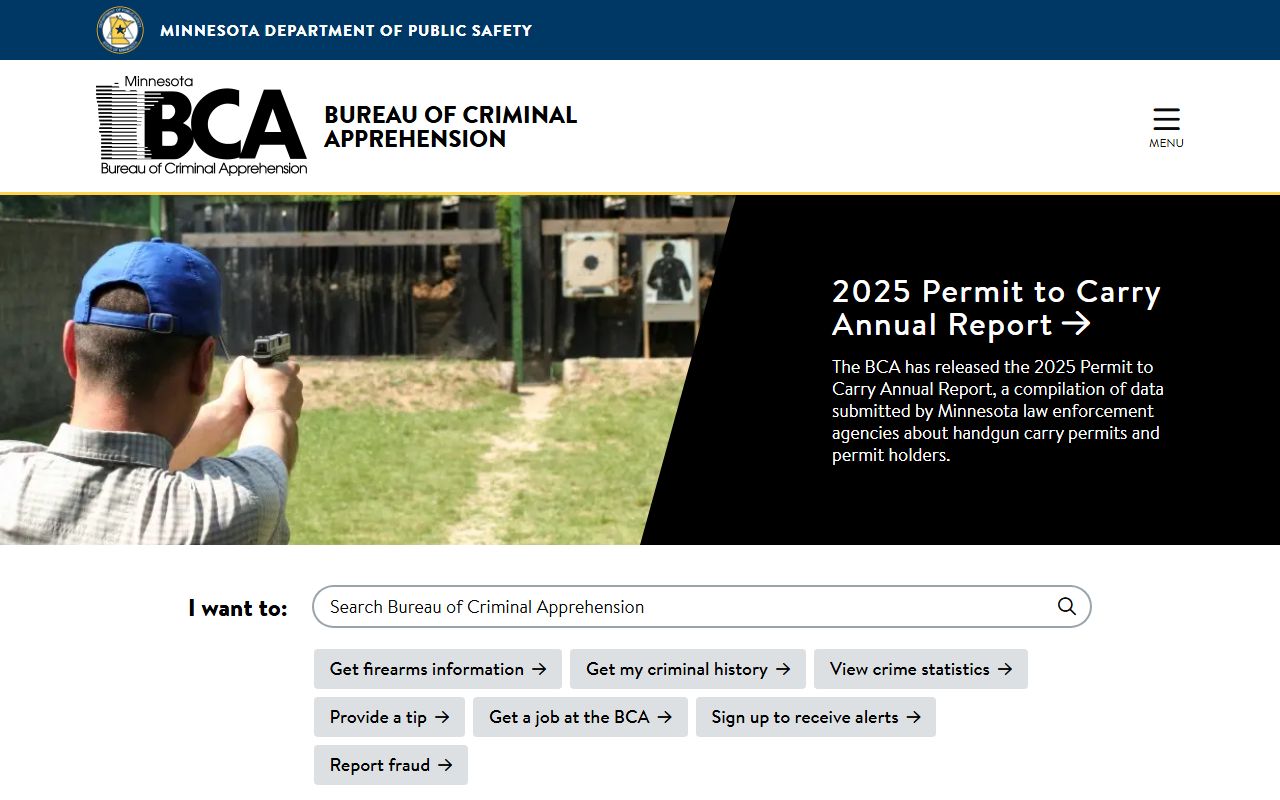
The Minnesota Bureau of Criminal Apprehension supports local agencies like St. Cloud PD by providing statewide criminal justice data systems that local records often connect to.
Understanding the Police Blotter
A police blotter is the continuous log of activity handled by a law enforcement agency. For St. Cloud, this means every call that generates officer response, every incident that produces a report, and every arrest made within city limits. The blotter covers a wide range of activity. On any given day, entries might include theft reports, vandalism calls, traffic accidents, domestic disturbance responses, drug arrests, and welfare checks.
The blotter is one of the core tools of public accountability for police agencies. By making incident logs available, law enforcement agencies allow the public to see what they're doing and where. Journalists use blotter data for local crime coverage. Residents use it to track safety in their neighborhood. Attorneys and investigators use specific incident reports for legal matters. The data serves different needs, but the starting point is the same: the department's record of what happened.
Not every call becomes a public record. Some incidents involve private data that stays protected. But the broad strokes of police activity are public, and that's what gives the blotter its value as a transparency tool.
Public Data Under Minn. Stat. § 13.82
Minnesota law is specific about what police data must be made public. Minn. Stat. § 13.82 lists the categories of law enforcement data that agencies must disclose. These include the time and date of incidents, the general type of call, the location at a level that protects individual addresses, and the names of people placed under arrest. The statute also specifies what is private: victim names and addresses, juvenile information, and data that could compromise an active investigation.
The law enforcement data statute is the primary legal basis for police blotter access in Minnesota. It applies uniformly across the state, so the rules that govern St. Cloud's records are the same ones that govern departments in Minneapolis, Duluth, and rural counties. The statute creates a baseline for public access that residents can rely on regardless of which agency holds the record they're looking for.
The state law enforcement data page showing Minn. Stat. § 13.82 is publicly available online. The screenshot below shows the statute as published by the Minnesota Legislature's public website.
Read Minn. Stat. § 13.82 to understand the full scope of public and protected law enforcement data in Minnesota.
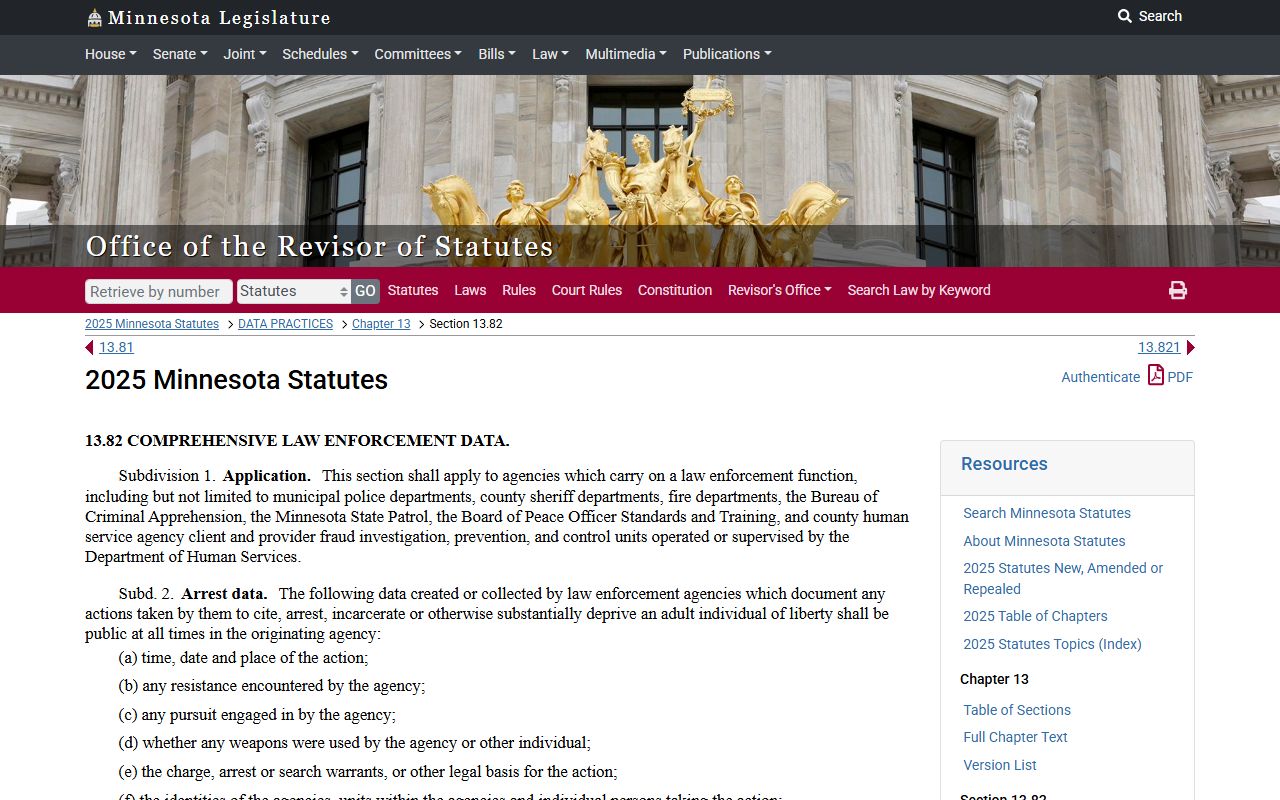
This statute governs how St. Cloud and all other Minnesota law enforcement agencies classify and release incident data to the public.
How to Get Police Records in St. Cloud
To request records from the St. Cloud Police Department, contact the department directly at 320-345-4444 or visit 101 11th Avenue North during business hours. Provide as much identifying information as possible: the date of the incident, the type of call, an incident or case number if you have it, and the general location. This helps the department locate the correct record and process your request efficiently.
The department will review your request and apply the data classifications required by state law. Public data must be released. Private data is available only to those with a legal right to it. If the department denies part of your request, they must tell you which classification applies and cite the relevant statute. You can appeal a denial to the Minnesota Department of Administration's Information Policy Analysis Division.
Response times vary. Simple requests for a single report might be fulfilled within a day or two. Requests covering extended periods or multiple incidents take longer. The department can charge for reasonable costs, but must give you an estimate before incurring significant costs. Minn. Stat. § 13.03 sets the procedural rules for request handling across all Minnesota government agencies.
Stearns County and the Sheriff's Office
St. Cloud is the county seat of Stearns County, and the Stearns County Sheriff's Office provides law enforcement services across the county outside city limits. The sheriff's records unit is located at 807 Courthouse Square, St. Cloud. For county-level records, including records generated by sheriff's deputies rather than city officers, contact the sheriff's records unit. The email for sheriff's records requests is sheriffrecords@stearnscountymn.gov.
County court records for cases originating in St. Cloud are filed at the Stearns County Courthouse, also in St. Cloud. This includes criminal case filings, charging documents, hearing records, and sentencing information. Court records are maintained separately from police records, so tracing a case from arrest through the court system requires looking at both the police department's incident records and the county court's case files.
Arrest Records and Criminal History
When St. Cloud police make an arrest, the basic facts become public under § 13.82: the name of the person arrested, the charge or charges, and the date and location of the arrest. This is standard blotter data. What happens after the arrest, including charging decisions, plea agreements, and sentencing, moves into the court system and is governed by court records rules rather than law enforcement data rules.
For criminal history records that go beyond a single incident, the Minnesota Bureau of Criminal Apprehension maintains statewide criminal records. Access to those records has its own rules separate from local police blotter requests. The BCA's Criminal Justice Information Systems manage this data at the state level.
Nearby Cities
St. Cloud is in Central Minnesota, somewhat removed from the Twin Cities metro. Other qualifying cities in the region include major metro-area communities to the south.
- Minneapolis - roughly 65 miles southeast of St. Cloud
- Rochester - southeast Minnesota; state's second-largest city
- Bloomington - south metro Hennepin County city